How the Anion Gap Evaluates
The anion gap is a reliable way to approximate the gap between measured cations and measured negatively charged ions in serum chemistry. In everyday acid-base analysis, it helps clinicians identify whether an electrolyte imbalance is being caused by unmeasured anions rather than by the ions typically reported on a lab panel. This makes it a useful diagnostic tool for working through a metabolic disturbance.
At its core, the anion gap reflects the relationship between sodium concentration, chloride concentration, and bicarbonate level. Because the body must maintain acid-base balance, shifts in electrolytes can suggest a broader acid-base disorder. That is why the anion gap is often reviewed alongside other laboratory values rather than used alone.
The concept is based on the fact that plasma remains electrically neutral, even though not all ions are measured directly. The reported numbers show an anion-cation difference that indirectly indicates the presence of acids, proteins, and other charged particles. In clinical practice, this is especially important when the serum bicarbonate is low and the source of the acid load needs to be identified.
Because the anion gap is an estimate rather than a direct count, it is best viewed as a screening measure with strong screening utility. It does not diagnose a specific disease by itself, but it narrows the differential diagnosis and supports clinical interpretation in a patient with suspected metabolic problems.
How the Anion Gap Calculator Works
An anion gap calculator relies on standard lab inputs to perform a quick calculation formula that estimates the gap from sodium, chloride, and bicarbonate. The usual formula is:
Anion gap = serum sodium − (serum chloride + serum bicarbonate)
This formula compares the key measured cation, serum sodium, with the primary measured anions, serum chloride and serum bicarbonate. The result is used during acid-base analysis to evaluate whether there are extra acids in the blood that are not directly shown on the panel.
Some labs use a different approach that includes potassium, but the sodium-based form is the most widely used in clinical review. The calculator is particularly valuable because it eliminates manual arithmetic errors and offers immediate support for clinical evaluation. It is often applied after reviewing a basic metabolic panel or an electrolyte panel.
For example, if the serum sodium is 140, serum chloride is 104, and serum bicarbonate is 24, the gap is 12. That number may fall within the expected reference range, depending on the laboratory’s methodology. The result then informs next steps in evaluating the patient’s acid-base disorder and overall metabolic disturbance.
Because the formula depends on measured lab inputs, the calculator is only as reliable as the numbers used. A small change in sodium, chloride, or bicarbonate can change the result and influence severity assessment. That is why the tool should be used with the full clinical picture, not as a standalone answer.
Typical Anion Gap Range and Interpretation
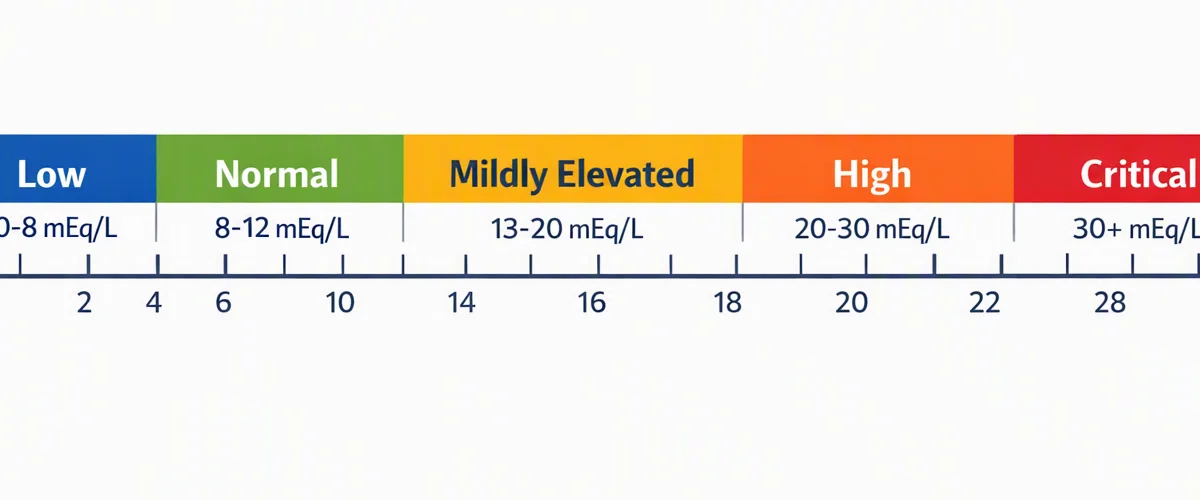
The reference range for the anion gap differs by facility because of different analyzers, reporting methods, and reference materials. In most settings, the normal interval is limited enough that a result above it suggests a increased anion gap, while a result within it may indicate a standard anion gap pattern. The exact number must always be considered in relation to the lab’s own reference interval.
Clinical interpretation begins with determining whether the gap is elevated, normal, or unexpectedly low. A high anion gap often signals accumulation of acids or other unmeasured particles. A normal gap does not exclude a serious acid-base problem, but it shifts attention toward bicarbonate loss or chloride gain rather than excess acid production.
Albumin is a major contributor to the gap because it behaves as an unmeasured anion. When reduced albumin is present, the measured anion gap may appear falsely low or normal even when there is significant acid accumulation. That is why a raw result must be interpreted carefully, especially in hospitalized or critically ill patients.
In practical terms, the same numeric value can mean different things in different contexts. A gap that is normal by one lab’s standards may be borderline high by another lab’s reference range. This is why the calculator should be paired with the laboratory’s specific reference interval and the patient’s acid-base status.
Reasons of High Anion Gap Metabolic Acidosis
Acidic metabolic state with a high anion gap typically suggests accumulation of acids that consume bicarbonate and leave behind excess anions. This remains one of the key uses of the anion gap calculator in practical acid-base analysis. The result helps clinicians distinguish a classic high-gap pattern from other forms of acidosis.
Lactate-related acidosis is a common cause and occurs when lactate builds up due to tissue hypoperfusion, shock, severe infection, seizures, or other states of increased anaerobic metabolism. Because lactate is an unmeasured negative ion, the gap rises as bicarbonate falls. In this setting, the anion gap supports recognition of a significant metabolic problem that needs urgent attention.
Ketoacidosis is another major cause, seen in diabetes, starvation, or alcohol-related metabolic stress. Ketone bodies act as unmeasured charged particles that increase the gap while lowering serum bicarbonate. The pattern can be especially useful when laboratory findings and symptoms suggest an acid load but the cause is not yet obvious.
Kidney failure can also produce a high gap because the kidneys are unable to clear organic acids efficiently. As acids accumulate, the anion gap rises and bicarbonate declines. Other causes may include toxins, severe dehydration, or marked tissue breakdown, but lactic acidosis, ketoacidosis, and renal failure are among the key clinical.
In high-gap states, the calculator helps frame the question: is the patient dealing with excess acid production, impaired acid excretion, or another source of metabolic imbalance? That question directs the next steps in evaluation and treatment.
Origins of Typical Anion Gap Metabolic Acidosis
A standard anion gap pattern, sometimes called non-anion gap acidosis, usually suggests bicarbonate has been depleted and replaced by chloride. The anion gap stays near the normal range, but the disorder is still present. The key clue is often a reduced bicarbonate with a relatively increased chloride, a pattern known as elevated chloride.
Bowel losses is a classic trigger because the gastrointestinal tract can lose base-rich fluid. As bicarbonate falls, chloride rises to preserve electrical balance, producing a normal anion gap acidosis. In this case, the calculator helps support the pattern but does not identify the source on its own.
Tubular acidosis is another important etiology. Here, the kidneys fail to handle acid or bicarbonate correctly, leading to ongoing acidosis with a normal gap. Different subtypes can present with distinct electrolyte findings, but the overall clue remains the same: a reduced bicarbonate with unchanged gap size.
High chloride itself is often part of the process because chloride replaces lost bicarbonate in the serum. This is why checking chloride values alongside the anion gap is essential. A normal-gap acidosis can be missed if the clinician focuses only on the gap and not on the full chemistry panel.
Recognizing a normal-gap pattern is important because treatment is different from high-gap acidosis. The calculator supports the distinction, but the underlying cause must be determined through history, examination, and further laboratory testing.
How to Adjust the Anion Gap with Albumin
Albumin is among the key unmeasured anions in the blood, so variations in serum albumin can greatly alter the anion gap. When hypoalbuminemia is present, the gap may understate the severity of acidosis. For this reason albumin correction is often recommended in acid-base analysis.
The corrected anion gap adjusts the measured value upward when albumin is low. Many correction methods exist, but the goal is the same: compensate for the loss of negative charge from albumin so the result better reflects the true acid burden. This is a practical form of gap correction that supports clinical interpretation.
A common approach is to add a fixed amount for each decrease in serum albumin below normal. The exact formula may differ by institution, but the principle remains stable. If albumin is reduced, the uncorrected number may appear deceptively normal, masking a high anion gap process.
Correcting for albumin is especially helpful in critical illness, liver disease, malnutrition, or any setting where protein levels may be altered. In these cases, the anion gap calculator should be paired with serum albumin so the interpretation matches the patient’s actual acid-base state. Without that step, the clinical picture may be partial.
In short, hypoalbuminemia can mask a clinically meaningful rise in acids. Albumin correction helps reveal that risk and increases the accuracy of the corrected anion gap during routine review.
Anion Gap, Delta Gap, and Mixed Disorders
The delta-gap and delta-delta calculation are specialized tools for detecting a mixed acid-base pattern. After a high anion gap acidosis has been found, these calculations help decide whether another disorder is present at the same time. It is especially useful when the patient’s numbers do not follow a single pattern neatly.
The delta gap compares the rise in the anion gap with the fall in bicarbonate. The change in bicarbonate is used to see whether bicarbonate has fallen proportionally to the gap increase. If the values do not match expected behavior, a second acid-base process may be present, such as metabolic alkalosis or an additional non-gap acidosis.
The delta-delta relationship is another way to measure the relationship between change in the anion gap and change in bicarbonate. A ratio outside the expected pattern can suggest a hidden combined disorder. This matters because a patient may have lactic acidosis plus diarrhea, or ketoacidosis plus vomiting, and the combined findings can blur the overall picture.
Using delta calculations enhances clinical interpretation because it goes beyond identifying whether the gap is high. It asks whether the acid-base disorder is isolated or layered. That distinction can shape treatment decisions, fluid choice, and the urgency of further testing.
For practical acid-base analysis, the sequence is often: measure the anion gap, decide if it is high or normal, and then apply delta methods if the pattern suggests more than one disturbance.
When to Use an Anion Gap Calculator for Clinical Review
An anion gap calculator is especially useful when interpreting a basic metabolic panel, arterial blood gas, or electrolyte panel in a patient with suspected acidosis. These results provide the core numbers needed to calculate the gap and judge whether the result matches the clinical picture. The calculator is a quick method to support clinical evaluation when time matters.
This is particularly helpful when the arterial blood gas shows a reduced bicarbonate or low pH and the cause is unclear. The calculator can assist in determining whether the process is a elevated anion gap disorder or a typical anion gap process. That distinction narrows the differential diagnosis and helps prioritize follow-up testing.
In routine care, the tool is also useful for reviewing a suspected electrolyte disturbance, tracking changes over time, or checking whether treatment is correcting the underlying metabolic problem. Because lab numbers can shift rapidly, repeated use may help with ongoing severity assessment and trend monitoring.
The calculator cannot override clinical judgment. Instead, it should be used as part of a structured approach that considers symptoms, medication review, fluid status, and additional lab results. Under those conditions, it offers strong screening utility and helps organize the diagnostic process.
Limitations and Common Calculation Errors
Despite its value, the anion gap has important limitations. Test variability can change the reported result because different analyzers and methods produce slightly different values. A number that seems abnormal on one report may fall within the normal normal range on another.
Measurement inaccuracies can also affect the outcome. As the formula depends on serum sodium, serum chloride, and serum bicarbonate, even minor errors can alter the outcome. This is one reason the result should be interpreted in the context of the full clinical picture rather than as a standalone value.
The technology used in testing matters as well. Ion-selective electrodes are often used to analyze electrolytes, but they are not immune to interference or method differences. These analytical details can affect the reported chloride or sodium and thereby affect the final gap.
A further limitation is the presence of unmeasured ions. The anion gap is an approximation, not a direct count of every charged particle in plasma. If unusual substances are present, the calculation may understate or exaggerate the true problem. This is why the tool is best used as a guide for further acid-base analysis, not as the final answer.
Typical errors include ignoring albumin, using the wrong reference range, or failing to consider a mixed disorder. The most reliable approach is to pair the calculation formula with the patient’s symptoms, acid-base status, and complete chemistry results.
FAQs
What is the purpose of an anion gap calculator?
An anion gap calculator is used to aid in acid-base analysis by estimating whether there is a hidden acid load in the blood. It helps separate metabolic acidosis with a high anion gap from a normal anion gap pattern and strengthens clinical interpretation of laboratory values.
What is a normal anion gap range?
The normal values depend on the laboratory’s reference range or reference interval. Because different analyzers report slightly different results, the most accurate answer is the one listed by the specific lab. A result within that range usually suggests a normal anion gap, while a higher value may indicate a high anion gap.
How is the anion gap calculated from lab values?
The common calculation formula is: serum sodium − (serum chloride + serum bicarbonate). This uses serum sodium, serum chloride, and serum bicarbonate to estimate the gap. An anion gap calculator automates the math and makes the process faster during clinical review.
Why correct the anion gap for albumin?
You modify the anion gap for albumin because hypoalbuminemia can make the measured gap appear falsely normal or low. Since albumin is a primary unmeasured anion, albumin correction helps reveal the true corrected anion gap and improves interpretation in acid-base disorders.
What does a high anion gap indicate in acid-base analysis?
A high anion gap in acid-base analysis usually reflects accumulation of unmeasured anions from a process such as lactic acidosis, ketoacidosis, or renal failure. It is a sign to metabolic acidosis and should prompt review of the patient’s labs, symptoms, and possible https://anion-gap-chart014.theglensecret.com/how-to-apply-an-anion-gap-calculator-for-acid-base-diagnostic-differentiation mixed disorders.